Welcome to the city that never sleeps on tradition
Tbilisi is one of those rare cities where every alley turns into a discovery. Built along the Mtkvari River at a crossroads of Europe and Asia, the Georgian capital has been absorbing, reinventing, and exporting culture for nearly 1,600 years. Persians, Byzantines, Arabs, Mongols, and Russians all left their mark here — and today’s Tbilisi wears those layers with a kind of nonchalant pride.
What strikes first-time visitors most is not any single landmark but the texture of the place: carved balconies drooping over cobblestone lanes in the Old Town, the sulfurous steam drifting up from bathhouses in the Abanotubani district, the smell of fresh churchkhela in a bazaar, and the sound of polyphonic singing leaking from a courtyard restaurant at midnight. Tbilisi rewards slow travel. Give it three days minimum and it will give you memories that last years.
| Where | Along the Mtkvari River, eastern Georgia |
| Base | Old Town or Vera/Vake for a quieter stay |
| Cost | Around ₾70–130/day mid-range; budget guesthouses from ~$15/night |
| Getting there | Tbilisi International Airport (TBS), well connected regionally and to Europe |
| Best time | April–June, September–November |
Exploring the Old Town (Dzveli Tbilisi)
The Old Town is the obvious starting point, and it never disappoints no matter how many times you return. The neighborhood fans out from Metekhi Church — perched dramatically above the river on a basalt cliff — and climbs through winding lanes toward Narikala fortress. Streets like Shardeni and Bambis Rigi are lined with wine bars, craft shops, and restaurants occupying beautifully restored 19th-century townhouses.
The architectural signature of the Old Town is the ornamented wooden balcony: jutting, carved, often sagging with age, strung with laundry and trailing grapevines. These balconies were not merely decorative — they served as outdoor living rooms in a climate where summers are long and hot. Many are in a state of gorgeous, photogenic decay; others have been lovingly restored. Both versions are worth photographing.
For an organized introduction to the neighborhood’s history and hidden corners, a guided Old Town walking tour is one of the best ways to spend your first morning. Local guides bring the city’s layered history alive in ways that a map simply cannot.
Narikala fortress and the Mother of Georgia
Rising above the Old Town on a ridge of volcanic rock, Narikala fortress dates back to the 4th century. Most of what you see today is the result of later Umayyad Arab and Georgian royal construction, with substantial additions made in the 17th century. An earthquake in 1827 brought down much of the interior, but the outer walls and towers remain imposing.
The climb to Narikala is worthwhile even if you have no particular interest in medieval fortifications, because the panorama from the top takes in the entire Old Town, the river, the cable-car gondolas gliding overhead, and the surrounding hills. The fortress is free to enter and open around the clock. Most visitors combine it with a walk through the adjacent Botanical Garden, a surprisingly lush escape that occupies a deep gorge behind the walls.
Standing sentinel above Narikala — and visible from much of the city — is the Kartlis Deda statue, known in English as the Mother of Georgia. The aluminium figure holds a bowl of wine in one hand (for guests) and a sword in the other (for enemies). It has become something of an unofficial emblem of Tbilisi’s character: generous hospitality underpinned by fierce independence.
Abanotubani: the sulfur bath district
Tbilisi’s name is thought to derive from the Georgian word for warm, a reference to the natural sulfuric hot springs that bubble up beneath the Abanotubani district. The domed bathhouses here — with their distinctive brick cupolas rising from the hillside — have been operating since at least the 5th century. The Persian poet Shota Rustaveli bathed here; Alexandre Dumas wrote about them; King Vakhtang Gorgasali supposedly founded the city after discovering them.
Today, the bathhouses range from simple communal pools to elaborately tiled private suites with attendants who offer vigorous scrubs and massages. Water temperatures hover around 37–43°C and the sulfur content is genuinely high — you will smell it from half a block away. The experience is deeply restorative: after 30 minutes in the water, your muscles feel like warm wax.
For a premium soak in one of the most celebrated bathhouses in the district, booking a royal sulfur pools experience in advance saves time and guarantees a private room. Prices for private rooms start around 30–60 GEL per person per hour, with public pools considerably cheaper. Our dedicated sulfur baths guide covers every bathhouse with current prices and booking tips.
Rustaveli Avenue and the city centre
Running north from Liberty Square to the Rose Revolution Square, Rustaveli Avenue is Tbilisi’s grand civic boulevard — think Paris’s Grands Boulevards scaled to a city of one million. The avenue is lined with neoclassical and art nouveau facades, many of them now home to embassies, banks, and cultural institutions. Key stops include:
The Georgian National Museum houses a remarkable collection spanning Bronze Age golden artefacts, medieval manuscripts, and ethnographic displays. The treasury room alone justifies a visit — it contains some of the finest examples of Georgian goldsmithing in existence.
The Rustaveli Theatre is the country’s most prestigious stage, housed in a Moorish-influenced building from 1901. Even if you cannot catch a performance, the facade is worth a photograph.
The Parliament of Georgia — the old parliament building on Rustaveli, now used for ceremonial purposes — is where the 2003 Rose Revolution played out. The current working parliament is in Kutaisi, but this building retains powerful symbolic weight.
Liberty Square anchors the southern end of the avenue and is dominated by a golden column topped with the dragon-slaying figure of Saint George. It serves as both a geographical and psychological centre of the city.
The Bridge of Peace and Rike Park
Opened in 2010, the Bridge of Peace is a pedestrian footbridge that crosses the Mtkvari River from the Old Town to Rike Park. Its glass-and-steel canopy is illuminated by thousands of LEDs at night, creating a spectacle that has divided architectural opinion ever since its opening — locals either love or loathe it. Whatever your verdict, crossing it at dusk offers one of the best views of the Metekhi Church and Narikala fortress.
Rike Park on the opposite bank is a pleasant green space with a large outdoor stage that hosts summer concerts and festivals. The cable car station here connects up to Narikala, offering an aerial perspective on the Old Town that is especially magical in the late afternoon light.
Mtatsminda and the city’s high ground
Mount Mtatsminda rises directly above the city centre and can be reached either by funicular (the line dates to 1905, though the current cars are modern) or by road. At the top, Mtatsminda Park combines an amusement park with sweeping panoramas — on a clear day you can see the Caucasus ridge to the north.
Also on Mtatsminda is the Pantheon of Georgian Writers and Public Figures, a hilltop cemetery where many of the country’s most celebrated literary and cultural figures are buried. Nikoloz Baratashvili, Ilia Chavchavadze, and Akaki Tsereteli all rest here, and the graves are maintained as something close to a national shrine.
Fabrika and the creative district
The neighbourhood around Fabrika — a Soviet-era sewing factory converted into a creative hub — represents the most contemporary face of Tbilisi. The factory’s courtyard now hosts independent coffee shops, vintage clothing stores, a hostel, concept restaurants, and weekend markets. It is the place to feel the pulse of Tbilisi’s young creative class and to spend a slow Sunday morning with a flat white and a secondhand book.
The surrounding Chugureti district has developed rapidly into one of the city’s most interesting eating and drinking neighbourhoods. Restaurants serving Adjarian, Megrelian, and Svan regional cuisine sit alongside wine bars specialising in natural and orange wines, and cocktail bars that would not look out of place in Berlin or Barcelona.
Tbilisi’s food scene
Georgian food is one of the great underrated cuisines of the world, and Tbilisi is the best place to discover it in its full complexity. The city’s restaurant scene has evolved dramatically in the past decade, moving well beyond the standard tourist menu to offer regional specialties, experimental modern-Georgian fusion, and serious natural wine programs.
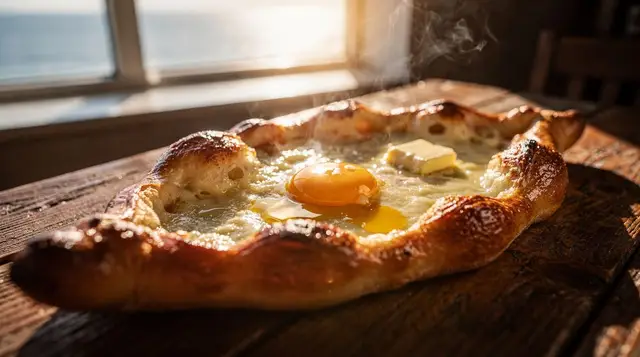
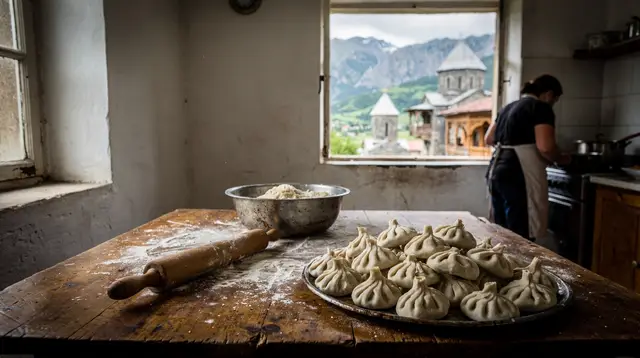
Essential dishes to seek out include khinkali (soup dumplings stuffed with spiced meat or mushrooms — always eat them by hand), khachapuri (cheese-filled bread in several regional variants), mtsvadi (charcoal-grilled pork skewers), pkhali (cold vegetable preparations bound with walnut paste), and lobiani (flatbread stuffed with spiced kidney beans).
For an immersive introduction to the ingredients and techniques behind these dishes, a cooking class with a local family is an exceptional experience. You will shop at a neighbourhood market, prepare a full Georgian feast, and eat it with your hosts — all in the space of a morning. Our cooking classes guide lists the best options with current prices.
For street-level food discovery, a street food and markets tour covers the bazaars and stalls that most visitors walk straight past. Our food tours guide has more options and neighbourhood recommendations.
Wine culture in the capital
Georgia’s claim to be the birthplace of wine (8,000-year-old qvevri vessels found in the country have made a strong archaeological case) infuses every aspect of the food and hospitality culture. Tbilisi’s wine bars are among the best in the world for exploring the country’s extraordinary range of indigenous grape varieties — there are over 500, of which about 40 are commercially cultivated.
Look out for amber wines (white grapes fermented on their skins in qvevri clay jars, producing orange-coloured wines with tannins unusual in whites), natural wines without added sulphites, and the Rkatsiteli, Mtsvane, Saperavi, and Chinuri varieties that form the backbone of Georgian viticulture. Our Kakheti wine tours guide covers day trips from Tbilisi into the wine country.
Nightlife and the underground scene
Tbilisi has become one of Europe’s most talked-about nightlife destinations, with a club scene that prizes artistic freedom, underground electronic music, and genuine inclusivity. The scene coalesced around venues like Bassiani (housed beneath a football stadium), Café Gallery, and Left Bank — all operating in buildings that retain a raw Soviet-industrial character that no designer could fabricate.
Entry to the best clubs typically requires navigating a door policy designed to filter out trouble rather than to be deliberately exclusive — appearing local, dressed casually, and showing genuine interest in the music goes a long way. The parties run through the weekend from midnight to Monday morning. This is not a scene for early risers.
Beyond the clubs, the Old Town’s wine bars stay busy until 2 or 3am on weekends, and the Vera neighbourhood has a concentration of jazz bars and live-music venues that attract a more mixed-age crowd.
Tbilisi’s neighbourhoods beyond the Old Town
Once you have covered the Old Town and Rustaveli Avenue, Tbilisi’s residential districts reward slower exploration, each with a distinct character. Sololaki, just west of the Old Town, has some of the city’s finest Belle Époque architecture — grand courtyard buildings in varying states of decay and restoration, quieter than the tourist core but a five-minute walk from it. Vera, further up the hill, mixes 19th-century townhouses with a concentration of jazz bars and a more residential, less touristy feel. Vake, Tbilisi’s most affluent district, has wide tree-lined avenues, Vake Park, and a growing cluster of contemporary restaurants popular with locals rather than visitors.
Across the river, Avlabari is the historic Armenian quarter and home to the Holy Trinity Cathedral (Sameba), the largest church in the South Caucasus; the Tbilisi Armenian quarter guide and the dedicated Avlabari guide cover both in detail. Marjanishvili, north of Avlabari, has a grittier, more local commercial energy around its namesake metro station and theatre. See the individual guides — Sololaki, Vera, Vake, Marjanishvili, and Mtatsminda — for walking routes and specific recommendations in each.
Practical: airport, connectivity, and getting your bearings
Tbilisi International Airport (TBS) sits about 18km east of the city centre; a taxi into town takes 30–40 minutes depending on traffic, and a slower but far cheaper bus (route 337) runs to Avlabari. Our Tbilisi airport guide covers current transfer options, SIM card kiosks, and currency exchange rates at the terminal — buying a local SIM or eSIM on arrival is worthwhile, since mobile data is cheap and most taxi and food-delivery apps assume you have a connection. The eSIM Georgia guide covers the digital-only option if you prefer to activate data before landing.
Tbilisi has also become one of the region’s more popular digital nomad bases, thanks to reasonable living costs, a growing co-working scene, and Georgia’s long visa-free stay for many nationalities. Our digital nomad Tbilisi post covers the practicalities for anyone considering a longer stay rather than a short visit.
Getting around Tbilisi
The city’s metro system is cheap (1 GEL per ride), reliable, and covers the main tourist areas with two intersecting lines. Surface transport includes buses and minibuses, but these are harder to navigate without Georgian. Taxis are abundant and cheap by European standards — always negotiate the price before getting in, or use the Bolt or Yandex apps for metered rides. Walking is genuinely pleasant in the Old Town and along Rustaveli, though the hills can be steep. Our dedicated Tbilisi metro and transport guide covers the full network map, ticket options, and which lines connect to which neighbourhoods, and the broader getting around Georgia guide covers onward travel to the rest of the country.
Pub crawls, street food, and structured tastings
Beyond restaurant dining, Tbilisi’s more organised food and drink circuits are worth building into an evening. A pub crawl through Tbilisi is a straightforward way to sample the Old Town and Fabrika-area bar scenes with company on a first night in the city, while the street food guide points to the specific bazaar stalls and quick bites — khachapuri corners, shawarma stands, and churchkhela sellers — that reward a wander rather than a sit-down meal. For wine specifically, a structured wine tasting in Tbilisi session at one of the city’s natural-wine bars is a good primer before heading out to Kakheti itself.
Day trips from Tbilisi
Tbilisi makes an excellent base for exploring the surrounding regions. The ancient capital Mtskheta is just 20km away (30 minutes by marshrutka), and the drive north on the Georgian Military Highway to Kazbegi is one of the great road journeys in the Caucasus. The Kakheti wine region is a 90-minute drive east. All three make superb day trips or overnight excursions.
Tbilisi with children
Tbilisi is more manageable with children than its steep hills and late-night wine bar culture might suggest. Rike Park’s cable car and the Mtatsminda amusement park both work well for younger visitors, the Botanical Garden behind Narikala offers shaded walking paths away from traffic, and several khinkali houses are relaxed enough for a noisy family meal. Sulfur bathhouses are generally fine for children old enough to sit still in warm water. Our dedicated Tbilisi with kids guide covers age-appropriate itineraries, stroller-friendly routes, and which neighbourhoods to base yourselves in.
Choosing a neighbourhood by trip style
| Neighbourhood | Best for | Trade-off |
|---|---|---|
| Old Town / Kala | First-timers, walkability to sights | Noisiest, priciest in peak season |
| Sololaki | Architecture lovers, quieter streets | Fewer restaurants on your doorstep |
| Vera | Jazz bars, residential feel | 15–20 min walk to Old Town |
| Vake | Local dining, green space | Further from major sights |
| Fabrika / Chugureti | Contemporary arts, nightlife | Less historic atmosphere |
| Avlabari | Armenian quarter, Sameba Cathedral | Across the river from the Old Town core |
Practical information for visitors
The best time to visit Tbilisi is spring (April–June) or autumn (September–November), when temperatures are mild, the city is lively, and neither the summer heat nor winter dampness intrudes. Summer (July–August) is hot and crowded; winter (December–February) is cool and atmospheric, with Christmas and New Year celebrations that are genuinely worth experiencing.
Accommodation ranges from budget guesthouses in the Old Town (from around $15 a night) to international five-star hotels. The first-time visitors guide covers visa requirements, currency, safety, and essential logistics. Georgia has a 1-year visa-free policy for citizens of 98 countries — check your eligibility before planning.
Frequently asked questions about Tbilisi
How many days do I need in Tbilisi?
Three days is the comfortable minimum for Tbilisi: one day for the Old Town, Narikala, and the sulfur baths; one day for museums, Rustaveli Avenue, and Mtatsminda; and one day for the food markets, Fabrika, and the wine bar circuit. Five days allows you to add at least one day trip to Mtskheta or the Military Highway.
Is Tbilisi safe for solo travellers?
Tbilisi is generally very safe by international standards, including for solo female travellers. Petty crime is low compared to most European capitals. The main risks are standard urban ones: watch your pockets in crowded bazaars, be cautious around the nightclub scene late at night, and take licensed taxis or use a metered app. The local culture is hospitable to the point of overwhelming — do not be surprised if strangers invite you home for wine.
What is the best neighbourhood to stay in?
For first-time visitors, the Old Town (Kala) or the adjacent Mtatsminda district places you within walking distance of all the major sights. Vera and Vake are quieter residential neighbourhoods with excellent restaurants and a local feel, slightly further from the tourist core. Fabrika and Chugureti suit travellers who prioritise the contemporary arts and food scene over medieval atmosphere.
What currency does Georgia use, and can I use cards?
Georgia uses the Georgian Lari (GEL). As of 2026, the exchange rate is approximately 2.6 GEL to the US dollar. Card payments are widely accepted in Tbilisi’s restaurants, hotels, and shops, but cash is preferred or required at markets, many bathhouses, and smaller guesthouses. ATMs are abundant and offer competitive rates. See our budget guide for current daily cost estimates.
When should I visit Tbilisi for the best weather?
May and October are the sweet spots. May brings warm temperatures (18–25°C), wildflowers in the surrounding hills, and the spring harvest energy that animates the whole country. October overlaps with the grape harvest (rtveli) season, which fills the city with the smell of must and the energy of celebration. Both months see manageable tourist numbers compared to the July–August peak.
Do I need to speak Georgian or Russian?
English is increasingly widely spoken in Tbilisi’s tourist areas, especially among people under 40. Restaurant menus in the Old Town almost always have English translations. Outside the tourist zone, Russian is more useful than English — most Georgians of the older generation speak it, even if they would prefer not to. A few words of Georgian (gamarjoba for hello, madloba for thank you) will earn you genuine warmth.
Can I drink the tap water in Tbilisi?
Tbilisi’s tap water is officially safe to drink and comes from mountain springs. Many locals drink it without filtering. However, the taste and mineral content vary by neighbourhood, and some visitors with sensitive stomachs prefer bottled water for the first few days while their systems adjust. Bottled water is cheap and widely available everywhere.
What are the must-try foods in Tbilisi?
Start with khinkali (Georgian soup dumplings) at a traditional khinkali house — hold the dumpling by the dough knob at the top, bite a small hole, slurp the broth, then eat the rest. Follow with Adjarian khachapuri (a boat-shaped bread topped with egg and butter), churchkhela (walnut strings dipped in grape must), and a glass of Rkatsiteli amber wine. For a structured introduction to the full culinary landscape, our food tours guide is the best place to start.
Which neighbourhood should I actually stay in?
The Old Town suits first-timers who want to walk everywhere; Vera or Vake suit travellers who want a quieter, more local base with a short taxi or metro ride to the sights. See the neighbourhood comparison table above, and the individual guides linked throughout this page for street-level detail.
Is Tbilisi good for a family trip with young children?
Yes, with some planning around the hills and late-night culture. Rike Park, the cable car, and Mtatsminda Park all work well for children, and several restaurants are relaxed about noise. See the Tbilisi with kids guide for a full itinerary.
Do I need an eSIM or physical SIM in Tbilisi?
Either works well. Physical SIMs are sold at kiosks in the airport arrivals hall and around the city for a few lari; an eSIM can be activated before you land if your phone supports it. See the Tbilisi airport guide and the eSIM Georgia guide for current providers and data plans.